Is Roman Catholicism Christian?
Question 60062.
Asking whether Roman Catholicism is Christian is a question that needs unpicking before it can be answered, because it is really two questions wearing one coat. Are individual Roman Catholics Christians? And does the Roman Catholic system, as officially defined, teach the gospel of the New Testament?
Those questions have different answers, and blurring them produces either a cruelty or a compromise. I want to avoid both. So let me set out where Rome stands with Scripture, where it stands against it, and how a Baptist pastor should speak about a communion of over a billion souls without either flattery or contempt.
Where Roman Catholicism agrees with Scripture
Honesty first. On the doctrine of God, Roman Catholicism is orthodox. It confesses the Trinity, one God in three persons. It confesses the full deity and full humanity of Jesus, the virgin birth, the bodily resurrection, the ascension and the return in glory. It recites the Nicene Creed and means it.
It holds that the Scriptures are inspired. It holds that sin is real, that judgement is coming, and that human beings cannot save themselves without grace. On the great primary doctrines that define the faith, Rome has often held the line where liberal Protestantism has surrendered it.
It has also defended the sanctity of human life, the reality of the resurrection body, and the historicity of Jesus with a consistency that shames a good many Protestant seminaries. I will not pretend otherwise in order to score a point.
Where Roman Catholicism departs from the gospel
The break comes at justification, and it is not a small crack. Paul writes that one is justified by faith apart from works of the law. The Greek verb translated justified, dikaioo, is a courtroom word. It means to declare righteous, not to make righteous by degrees.
The Council of Trent, which remains binding, anathematised the man who says that justifying faith is confidence in the divine mercy which remits sins for Christ’s sake alone. It defined justification as an infused righteousness that increases through the sacraments and can be lost by mortal sin and restored by penance. That is a different mechanism from the one Paul describes.
So the question is not whether Roman Catholicism talks about grace. It does, constantly. The question is whether grace is a declared verdict received by faith or a substance dispensed in instalments through a system. On that, Rome and the New Testament are saying different things.
The Mass and the finished work
The letter to the Hebrews rests its whole argument on the once-for-all character of the offering of Jesus. He entered once for all into the holy places. He offered for all time a single sacrifice for sins and sat down. The sitting down is the point, because a priest who is still standing is a priest whose work is unfinished.
Roman Catholicism teaches that the Mass is a true and proper sacrifice, the same sacrifice as Calvary re-presented, offered for the living and the dead. Catholic theologians insist this is not a repetition, and I take that clarification seriously, but an altar with a priest offering a sacrifice for sin sits uneasily beside he sat down at the right hand of God.
This is not a quarrel about ceremony. It is a quarrel about whether the work is done.
Purgatory, indulgences and assurance
Purgatory follows logically from the view of justification just described. If righteousness is infused progressively and must reach a certain level, then most people will die short of it, and something must finish the job.
But Scripture offers no such holding pattern. Paul expects to depart and be with Christ, which is far better. The thief on the cross is told today you will be with me in paradise, with no interval and no purging mentioned, and he had not received a single sacrament.
The pastoral effect is the point I care about most. A system that cannot promise present assurance leaves people afraid, and I have sat with the dying who were still counting. John wrote his first letter that you may know that you have eternal life. Assurance is not presumption, it is the intended fruit of the gospel.
Mary, the saints and the one mediator
The Marian dogmas developed late and rest on tradition rather than text. The immaculate conception was defined in 1854 and the bodily assumption in 1950, neither being taught in Scripture. Titles such as mediatrix and co-redemptrix, whatever nuance is attached to them, press against the plain statement that there is one God, and there is one mediator between God and men, the man Christ Jesus.
Prayer to saints raises the same difficulty from another direction. To hear the prayers of millions simultaneously requires attributes that belong to God alone, and Scripture consistently forbids seeking communication with the dead.
I have written at greater length on praying to Mary or the saints, and I would not want to repeat the whole argument here.
The authority question underneath everything
Every one of these disagreements traces back to a single root. Where does final authority lie? Roman Catholicism answers with a threefold cord of Scripture, tradition and the teaching office of the church, and the teaching office alone determines the meaning of the other two.
That is why appealing to a text does not settle a debate with Rome. If the magisterium may define what Scripture means, then Scripture cannot correct the magisterium, and the Bible has become a witness that may only testify as instructed.
Jesus faced the same structure in a different form when He told the Pharisees they had made void the word of God by their tradition. It was not that their traditions were all wicked. It was that tradition had been placed where Scripture belonged.
So are individual Roman Catholics saved?
Some are. I say that without hesitation and without qualification. I have met Catholics who trust Jesus alone for their salvation, who love the Scriptures, who would tell you plainly that their hope rests on the cross and not on their own record.
God saves people through faith in His Son, and He is not restricted by the letterhead on the building. There are people inside Roman Catholicism who believe better than their system teaches, just as there are people in Baptist churches who believe far worse than their statement of faith says.
But I would not tell an enquirer that the system will get them there. A man may be saved despite a defective gospel. He is not saved by one.
How to speak about this without being a boor
Tone matters here, and evangelicals have often got it badly wrong. Sneering at rosaries and statues wins nothing and dishonours the Saviour we claim to be defending. If your critique of Roman Catholicism is fuelled by tribal satisfaction rather than by love for people, put it down until your heart has changed.
Ask questions rather than making speeches. What do you think happens when you die, and why? What is your hope resting on this morning? Those questions go further than an argument about Trent, and they get to the same place.
And remember that many Catholics have never read the catechism they are assumed to be defending. Do not argue with a position your friend does not actually hold.
Where this leaves ecumenical cooperation
I can stand with Roman Catholics against abortion, against euthanasia, against the erasure of the created distinction between men and women. On those matters we are allies and I am glad of it.
What I cannot do is treat the difference over justification as a historical misunderstanding now resolved. Joint declarations have papered over it with careful language, but Trent has never been rescinded and its anathemas still stand in the text.
So cooperation in the public square, yes. Shared evangelistic mission that pretends the gospel is not in dispute, no. That is not narrowness, it is honesty, and honesty is the only basis on which any real conversation can happen.
What Rome should make us examine in ourselves
Before we get comfortable, notice that most of Rome’s errors have Protestant cousins. Baptism treated as the thing that makes a person a Christian. Assurance grounded in how well the week has gone. Preachers who function as an unquestionable teaching office in their own congregation.
The Reformers did not claim that Protestants were better people. They claimed that the gospel is received rather than achieved, and that claim indicts every religious system that creeps back towards achievement, including ours.
If reading this makes you feel superior, you have missed it. It should make you grateful, because by grace you have been saved through faith, and this is not your own doing.
How Roman Catholicism reached these positions
It helps to remember that Roman Catholicism did not arrive fully formed. The bishop of Rome was one bishop among several for centuries, and the claim to universal jurisdiction developed slowly against real resistance from the eastern churches.
Doctrines accumulated in the same way. Transubstantiation was defined in 1215. Purgatory was formalised at Florence in 1439. The treasury of merit, from which indulgences are drawn, was articulated in the thirteenth century. Papal infallibility was defined as late as 1870.
None of this is said to score a cheap point about novelty. It matters because Roman Catholicism presents itself as the unchanged deposit of the apostles, and the historical record shows a system that grew. Growth is not automatically corruption, but it does mean the appeal to antiquity has to be tested rather than assumed.
Read the letters of Ignatius or Clement and you will find much that is recognisably early catholic in the small sense of the word, and almost nothing that resembles the developed Marian dogmas or the machinery of indulgences.
The Reformation was about a text, not a mood
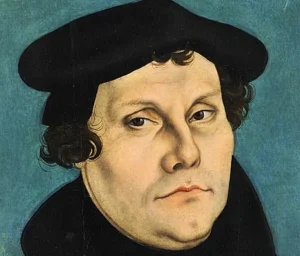
Luther did not begin by wanting a new church. He began with a Greek New Testament and the discovery that the Latin translation had rendered Jesus’ first word in Matthew 4:17 as do penance where the Greek metanoeo means change your mind.
That single translation issue exposed the whole system. If repentance is an inward turning rather than a sacramental transaction, then the machinery built on the transaction has nothing to stand on.
This is why the argument with Roman Catholicism is not fundamentally about statues or Latin or incense, and evangelicals who make it about those things have not understood their own history. It is about what the words of Scripture say.
Vatican II and what did and did not change
The Second Vatican Council in the nineteen sixties changed the atmosphere considerably. Protestants became separated brethren rather than heretics. The Mass moved into the vernacular. Bible reading among the laity was encouraged rather than discouraged, and that is a change I welcome without reservation.
But the council reaffirmed Trent rather than revising it. It restated the necessity of the sacraments, the teaching authority of the magisterium, and the Marian doctrines, and it added the title Mother of the Church.
So the warmth is real and the doctrine is unchanged. That combination is what makes conversation with Roman Catholicism both easier and, in a way, more confusing than it was five hundred years ago. Friendlier language can hide a difference that has not moved.
Roman Catholicism and the ordinary believer
I keep coming back to people rather than systems, because it is people who die. A great many Catholics I have met have never heard a clear explanation of justification, in a Catholic church or anywhere else.
They are not defending Trent. They are doing what they were taught by a grandmother they loved, and the God they are reaching for is the real one. When Paul stood in Athens he did not open by mocking the altars, he said that the God they worshipped in ignorance he would now proclaim.
That is my posture. Not, you are in a false church, but, here is what the Scriptures say about how a person is put right with God, and would you look at it with me? The third chapter of Romans reads the same in a Catholic Bible as in mine.
A note on tone and on our own tradition
I have tried to write this without heat, and I want to end the argument section by saying why. My grandmother’s generation of British evangelicals often spoke about Roman Catholicism in terms that were more tribal than theological, and the fruit of it was suspicion rather than conversion.
Sectarian bitterness has poisoned whole communities in these islands, and the people who suffered were rarely theologians. If our disagreement cannot be stated in a way that a Catholic neighbour would recognise as fair, we should not state it at all until we can.
So state the difference plainly and hold it firmly. Justification is by faith alone, the work is finished, the mediator is one, and the Scriptures stand over the church rather than under it. Then love the person in front of you and leave the result with God.
Paul managed to say his opponents were preaching another gospel and still write that his heart’s desire and prayer to God for them was that they might be saved. Both sentences came from the same pen and the same heart, and I have never found a better model.
So, now what?
If you are a Catholic reading this, I have not written to score off you. I would ask one question and leave it with you. If you died tonight, on what would your hope rest? If the answer includes anything you have done or anything the church has done to you, then Paul’s letter to the Romans is worth an evening of your time.
If you are an evangelical, get your own house in order before you criticise. Can the people in your church explain justification by faith? Do they have assurance? If not, the problem you are worried about elsewhere has already arrived at home.
And if you have a Catholic friend, do the harder and better thing. Read a Gospel with them. See also the difference between Catholic and Protestant and the Catholic and Protestant views of salvation.
For by grace you have been saved through faith. And this is not your own doing; it is the gift of God, not a result of works, so that no one may boast.
Ephesians 2:8 to 9, ESV
For Further Study
Charles Ryrie’s Basic Theology gives a clear evangelical treatment of justification and the difference between imputed and infused righteousness. Millard Erickson’s Christian Theology handles the doctrine of the church and the question of authority with more historical detail than most single volumes manage. Lewis Sperry Chafer’s Systematic Theology is dated in places but still valuable on the finished work of the cross and on assurance. For the historical background, the decrees of the Council of Trent are freely available and worth reading in the original rather than in summary, since Rome’s own words are more useful in conversation than anyone’s paraphrase of them. J. Dwight Pentecost and John Walvoord are less directly concerned with this subject but are helpful on the distinction between the church and Israel, which shapes how one reads the claims of any institution to be the continuation of the covenant people.
Looking for another question to explore?
🎲 Try a Random Question